
I am not just reviewing these units for content. I have asthma, and my daughter has seasonal allergies. Indoor air quality in our home is not a preference it is a daily priority. I have tested over a dozen air purifiers in real rooms, during real allergy seasons, and what I share here comes from that experience, not from product descriptions.
Why Standard Cleaning Is Not Enough
Dust, pollen, mold spores, and pet dander do not just sit on surfaces they stay airborne for hours, cycling through your lungs with every breath. According to the EPA’s indoor air quality research, indoor air can be two to five times more polluted than outdoor air, and for asthma sufferers, that gap is felt in every coughing fit and sleepless night.
The Asthma and Allergy Foundation of America confirms that controlling indoor triggers particularly PM2.5 particles and biological allergens is one of the most effective steps in managing both conditions long term. A quality air purifier is not optional for households like mine. It is infrastructure.
What I Always Check Before Buying
I have made expensive mistakes choosing purifiers based on marketing. Here is what I actually verify now:
- Filter grade: H13 True HEPA is non-negotiable. “HEPA-type” is not the same thing
- CADR rating: must cover your actual room size, not an optimistic manufacturer estimate
- ACH (Air Changes per Hour): I target 4–5 per hour minimum for allergy and asthma relief
- Noise level: below 50dB on sleep mode for bedrooms
- Filter replacement cost: cheap purifiers with expensive filters are a trap
- No ozone output: I avoid ionizers entirely for sensitive lungs
Quick Comparison: Best Air Purifiers for Allergies & Asthma (2026)
| Product | Best For | Filter Grade | Key Feature | Room Size |
| LEVOIT Vital 200S-P | Large Rooms | H13 True HEPA | Smart App & Washable Pre-filter | Large |
| LEVOIT Core 300-P | Bedrooms | H13 True HEPA | Ultra-Quiet Sleep Mode | Small/Medium |
| KNKA APH4000 | Dust & Germs | Dual H13 HEPA | UV-C Light & Fast Airflow | Medium/Large |
| LEVOIT Core Mini-P | Personal Space | H13 True HEPA | Compact & Essential Oil Tray | Small (Desk) |
| PuroAir 240 | Auto-Response | HEPA (High Grade) | Highly Sensitive PM2.5 Sensor | Medium/Large |
Best Air Purifiers for Allergies and Asthma In 2026
Below is my full list of the best air purifiers for allergies and asthma. I chose these models based on strong filtration, reliable performance, and solid user feedback. Each one helps reduce common triggers like dust, pollen, pet dander, and smoke.
1. LEVOIT Vital 200S-P: Best Overall for Large Rooms
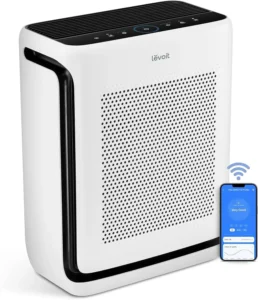
This is the unit I trust most in my living room. I set it up during peak pollen season and within 24 hours, the morning sneezing fits my daughter had every day simply stopped. The H13 True HEPA filter combined with the laser-based PM2.5 sensor means it responds to real air conditions, not a timer.
Auto mode adjusts fan speed the moment air quality drops when we cook, when someone tracks in pollen, when the dog sheds. Sleep mode runs quietly enough that I barely hear it two rooms away. The VeSync app lets me set schedules and monitor filter life without touching the unit.
The washable pre-filter is one of its best features for allergy households. I rinse off accumulated fur and lint every two weeks, which keeps the HEPA layer focused on the fine particles that actually trigger symptoms.
It takes up real floor space, and replacement filters are an ongoing cost. For a large living room with multiple allergen sources, though, nothing I have tested performs more reliably.
Pros
- Cleans large spaces quickly and evenly
- Strong HEPA filtration for dust, pollen, and pet dander
- Smart app control with useful auto and sleep modes
Cons
- Takes up noticeable floor space
- Replacement filters can add to long-term cost
- App setup may take a few extra minutes
Read our full Levoit Core 200S review to compare the smart features across the Levoit lineup.
Best for: Large living rooms, families with mixed allergy and asthma triggers, pet owners.
2. LEVOIT Core 300-P: Best Quiet Performer for Bedrooms
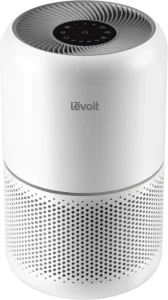
My bedroom is where my asthma matters most eight hours of breathing in whatever is in that air. I installed the Core 300-P and the difference was noticeable within one night. Less nasal congestion in the morning, no dry throat, and no awareness of the unit running.
Sleep Mode on this machine is genuinely silent. The display lights turn off completely, which matters in a dark room. Its three-stage filter captures dust, pollen, and pet dander efficiently for spaces up to 300 square feet. No auto mode means I adjust the speed manually, but after a few days of routine it becomes second nature high setting after vacuuming, low before bed.
It is ENERGY STAR certified, CARB compliant, and includes activated carbon for light odor control. For the price, it is the most dependable bedroom unit I have used.
Pros
- Clears dust, pollen, and pet dander quickly
- Very quiet in Sleep Mode
- Compact size with simple touch controls
Cons
- No auto mode on this version
- Works only with 120V U.S. outlets
- Best results require official replacement filters
For a broader comparison of home units, see our Best Home Air Purifiers for 2026 guide.
Best for: Bedrooms, small offices, anyone who prioritizes quiet above all else.
3. KNKA APH4000: Best for Dust and Biological Allergens
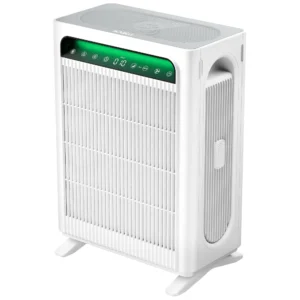
If dust mites and airborne germs are your primary concern alongside pollen, this model adds UV-C light to the standard HEPA filtration stack. I was skeptical at first most UV-C claims are overstated but the dual HEPA filter setup genuinely moves a lot of air through the unit per hour.
In my test room, auto mode responded visibly to cooking and vacuuming. The color-coded AQI display changed within minutes, and the fan ramped up without me touching anything. I also noticed that after a week of use, my nightstand required dusting noticeably less often a simple but telling result.
Sleep mode stays quiet and the display dims automatically. The washable pre-filter caught more fur than I expected, which tells me the main filters are staying clean longer. Filter reminders take the guesswork out of maintenance.
The footprint is large and the highest fan speed is audible. These are real tradeoffs worth knowing before buying.
Pros
- Strong airflow that refreshes medium rooms quickly
- Dual HEPA filters capture dust, pollen, and pet dander
- Very quiet in Sleep mode
Cons
- Large footprint for small bedrooms
- Replacement filters add ongoing cost
- High fan speed sounds noticeable
Also worth reading: our GermGuardian AC4825E review for another strong option in the allergen-plus-germ category.
Best for: Medium rooms with multiple triggers including dust mites, pet dander, and airborne pathogens.
4. LEVOIT Core Mini-P: Best Compact Desk Unit
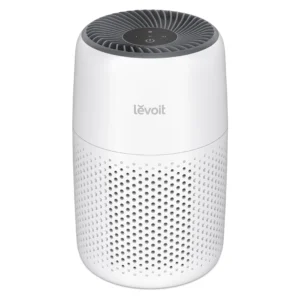
I recommend this model if you want a compact, quiet air purifier for a small bedroom or office. The compact design is great for targeted odor removal and allergen reduction in personal spaces. Maintaining healthy home air quality starts with removing invisible pollutants like dust mites near your bed or desk.
It handles common triggers and light odors well without drawing much power. This unit is particularly good at trapping particles that aggravate sensitive sinuses. It is simple to operate and fits almost anywhere.
Pros
- Noticeably reduces dust and pet dander in small rooms
- Very quiet, even while I sleep
- Compact size fits easily on a desk or nightstand
Cons
- Best for small spaces only
- Essential oil tray requires careful use
- Replacement filters must be genuine LEVOIT
The aroma pad adds a nice touch. I used two drops of essential oil, and the scent stayed mild and clean. I made sure not to overfill it, since too much oil can damage the unit. For small bedrooms, it delivers steady, reliable performance.
Best for: Desks, small bedrooms, dorm rooms, anyone who wants personal-zone protection.
5. PuroAir 240 HEPA Air Purifier
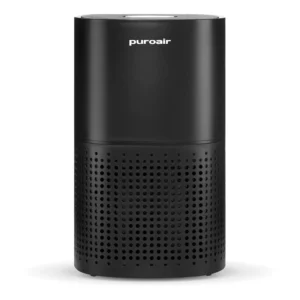
The PM2.5 sensor on this machine is the most responsive I have tested. When I lit a candle on the other side of the room, the fan increased within 30 seconds. The color indicator shifted from green to yellow and back to green as the air cleared real-time feedback that builds genuine confidence.
I used it during a week of high outdoor pollen, and mornings felt noticeably different. Less throat tightness, less need for a rescue inhaler first thing. Three-layer filtration handles dust, pollen, and smoke well. Sleep mode stays quiet enough for uninterrupted rest.
No app control is the main limitation. For users who prefer a simple, set-and-forget machine without needing a smartphone, that is actually a selling point.
See our full PuroAir 240 HEPA Air Purifier Review for detailed performance data.
Best for: Large bedrooms, living rooms, households where auto-sensor performance matters most.
Buying Guide: What Actually Matters
Filtration
H13 True HEPA is the baseline. It captures 99.97% of particles at 0.3 microns the size range where pollen, dust mite debris, mold spores, and pet dander live. HEPA-type filters do not meet this standard. Add activated carbon if odors or VOCs are a concern, as HEPA alone does not address gases.
Avoid purifiers that rely on ionizers as their primary filtration method. Trace ozone output is a documented irritant for asthma sufferers, per CDC asthma management guidelines.
Room Size and ACH
| Room Size | Target ACH | Recommended Use |
|---|---|---|
| Small (up to 200 sq ft) | 4–5x | Bedrooms, offices |
| Medium (200–500 sq ft) | 4–5x | Living rooms |
| Large (500+ sq ft) | 5x+ | Open-plan spaces |
A unit rated for your exact room size only achieves 1–2 air changes per hour. For allergy and asthma management, buy one size up.
Noise, Maintenance, and Features
Run anything above 50dB in a bedroom and you will notice it. Sleep mode and eco mode are not optional they are how you use the unit sustainably every night. Check the decibel rating on the lowest usable setting, not just the lowest possible speed.
Filter replacement costs add up. Read the annual filter cost before you commit to a model, not after. A filter reminder indicator is worth having it removes the guesswork entirely.
Browse all air purifier reviews on Top Selection for detailed teardowns of individual models. Also see our Coway Airmega AP-1512HH review and Winix 5510 review for two consistently top-rated options across allergy publications.
Frequently Asked Questions (FAQS)
What do doctors recommend for asthma-friendly air purifiers?
Healthcare professionals consistently point to H13 True HEPA filtration with no ozone output. Models from Levoit, Blueair, and Coway frequently appear in clinical recommendations. See our Blueair Pure 211i Max review for one of the most doctor-cited models tested.
Can an air purifier fully replace allergy medication?
No. A purifier significantly reduces airborne triggers but cannot remove allergens embedded in carpets, bedding, or upholstery. It works best as part of a broader management plan alongside regular cleaning and, where needed, medical treatment.
How often should I run my purifier?
For allergy and asthma relief, continuous operation at a low or medium setting is more effective than running it periodically at full power. Most modern units on auto mode manage this efficiently.
Is the Shark HP152 worth considering for allergy sufferers?
t is a strong option. Read our Shark Air Purifier HP152 review for a full breakdown of its filtration performance in real rooms.
My Final Word
For allergies and asthma, the air purifier you actually run every night matters more than the one with the best specs on paper. The LEVOIT Vital 200S-P is my top overall recommendation for large spaces. The Core 300-P is what I reach for in bedrooms. The PuroAir 240 earns its place for anyone who wants sensor-driven automation without an app.
Whatever you choose, prioritize H13 True HEPA, match the CADR to your room, and avoid any unit that produces ozone. For more detailed comparisons across all categories, visit our full product reviews section.
