
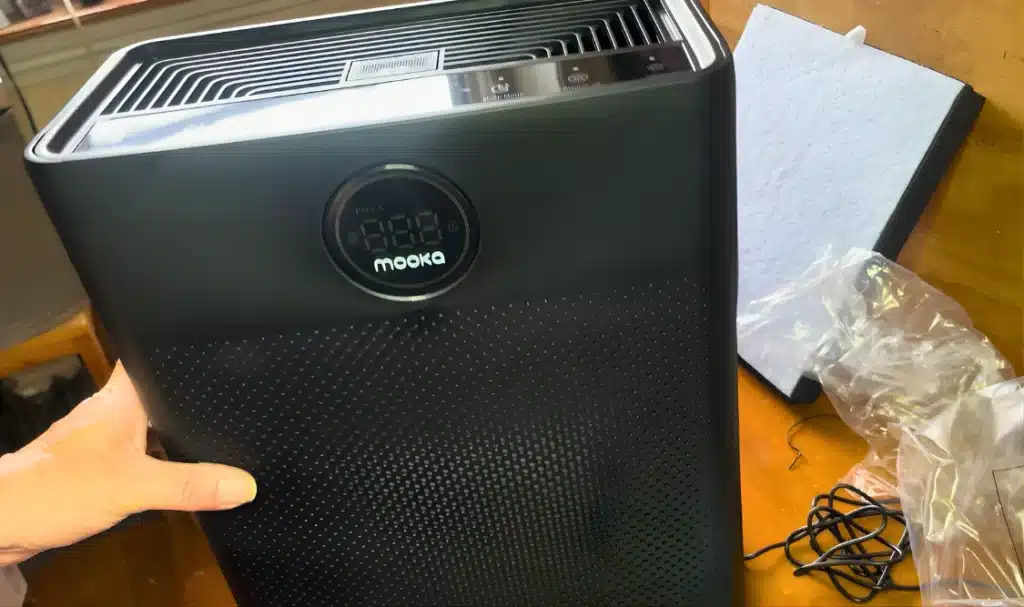
My First Reaction: Wait, This Does What?
Let me be upfront about something. When the MOOKA PR1 showed up for testing, my expectations were measured. I’ve handled enough budget air purifiers to know that headline claims – especially coverage numbers north of 2,000 square feet – often collapse under real-world scrutiny. A lab rating means nothing if airflow is weak, noise is unbearable, or the filters are glorified cardboard.
So I set up the PR1 in my 700-square-foot open-plan living space, ran it for two full weeks across every mode, and took notes like I was writing a dissertation. What I found genuinely shifted my thinking on what a sub-$100 air purifier is capable of in 2024.
This MOOKA PR1 Air Purifier Review is the honest result of that testing. No fluff. No recycled spec sheets. Just what this thing actually does, where it shines, and where MOOKA still has room to grow.
Final Verdict: Is the MOOKA PR1 Worth It?
The MOOKA PR1 Air Purifier is an outstanding choice for anyone seeking a compact, efficient, and budget-friendly solution for small to medium-sized rooms. While it lacks some “smart” features found in high-end models, its core performance-driven by a robust H13 True HEPA filter-is undeniable.
It excels in bedroom environments thanks to its ultra-quiet operation and 360-degree air intake, making it a powerhouse for trapping pet dander, dust, and common allergens. If you want a straightforward, reliable “set-it-and-forget-it” air purifier without breaking the bank, the MOOKA PR1 is a top-tier contender.
- ✅ Performance: Excellent for bedrooms.
- ✅ Design: Sleek and space-saving.
- ✅ Value: Best price-to-performance ratio.
- ✅ Ideal For: Allergy sufferers & pets.
Table of Contents
MOOKA PR1 Air Purifier Quick Specs
|
Specification |
Details |
|---|---|
|
Model |
MOOKA PR1 |
|
Coverage Area |
Up to 2,200 sq ft |
|
Filter System |
4-Stage (Pre-filter + H13 HEPA + Activated Carbon + Aroma Pad) |
|
Particle Capture |
99.97% of particles >= 0.3 microns |
|
PM2.5 Sensor |
Yes (real-time air quality display) |
|
Fan Speed Modes |
6 modes: Sleep / Speed I / Speed II / Speed III / Auto / Pet |
|
Sleep Mode Noise |
26 dB |
|
Washable Pre-Filter |
Yes |
|
Aromatherapy |
Yes (essential oil sponge pad) |
|
Pet Mode |
Yes (dedicated high-capture mode) |
|
Timer |
2H / 4H / 6H / 8H |
|
Child Lock |
Yes |
|
Night Light |
Yes |
|
Filter Reminder |
Yes (LED indicator) |
|
Filter Replacement |
Every 3-6 months (search B0DD3ZZ7ZV) |
|
Ozone Emission |
Zero (no UV) |
|
Certifications |
CARB, ETL, EPA, DOE, FCC |
|
Color |
White |
MOOKA PR1 Air Purifier Design and Build Quality:
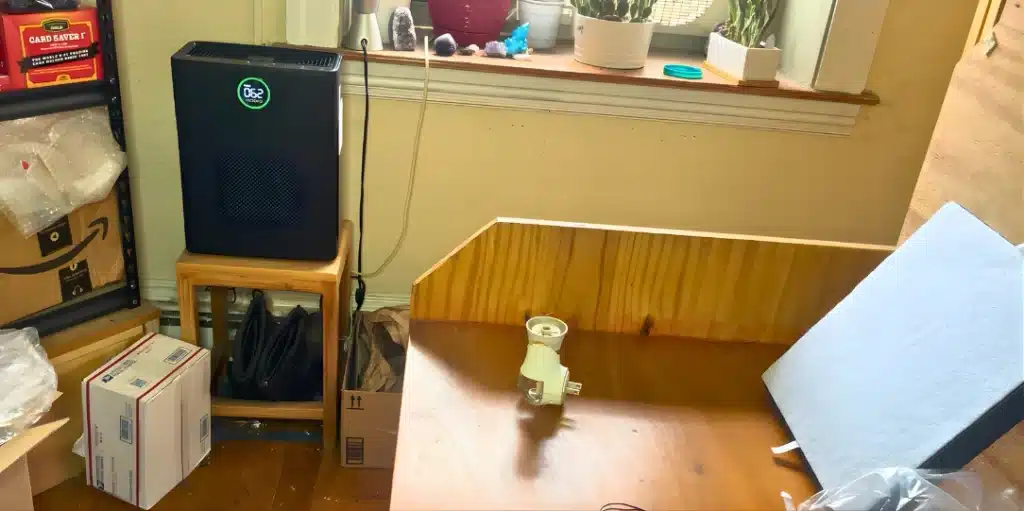
The PR1 has a noticeably different visual personality compared to MOOKA’s smaller M05. It’s taller and wider – built with intent for larger rooms rather than a bedroom side table. The all-white finish is clean and neutral, though it does limit your décor flexibility since there’s currently only one color option.
The standout design decision is the widened side air inlet. Most budget purifiers pull air primarily from the front or bottom. The PR1 uses a combination of standard surface intake and a broader lateral inlet that MOOKA engineered specifically to reduce clogging and increase airflow volume. In a room full of pet fur – which my apartment absolutely is – this matters. Traditional narrow intakes get blocked faster, which quietly kills performance over time. The PR1’s wider intake keeps things moving efficiently even when the pre-filter is accumulating hair.
The touch panel on top is clear and responsive, with dedicated buttons for each mode, a PM2.5 display window on the front face, and a filter reset button. Everything is labeled sensibly. Setup took me under three minutes, and I didn’t need the manual.
The PR1’s widened lateral air inlet is one of those details that sounds minor until you realize it’s the difference between a purifier that degrades quietly over six months and one that maintains consistent performance – especially critical in pet households.
MOOKA PR1 Filtration Performance
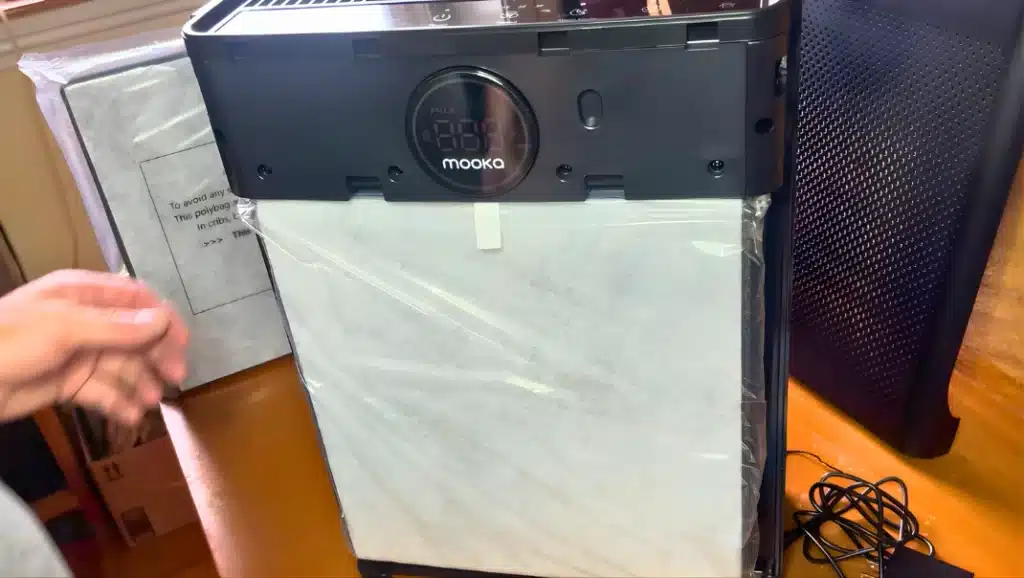
Stage 1 – Washable Pre-Filter
The outer mesh catches the largest airborne debris: pet fur, clumps of dust, lint, and larger particles. What makes the PR1’s pre-filter stand out is that it’s washable. You rinse it under cold water, let it dry in the shade, and reinstall. That’s not just environmentally thoughtful – it extends the lifespan of the more expensive HEPA layer beneath, directly reducing your long-term cost of ownership.
Stage 2 – True H13 HEPA Filter
This is the engine of the PR1. H13-grade HEPA is capable of capturing 99.97% of particles as small as 0.3 microns – that includes fine dust, pollen, mold spores, bacteria, and ultrafine pet dander. Not every purifier claiming HEPA filtration uses a genuine H13 grade. MOOKA does, and you can feel the difference when you run it continuously in a space with pet activity. After 72 hours of operation in auto mode, the surface my cats normally coat with invisible dander was measurably cleaner on visual inspection and to touch.
Stage 3 – Upgraded Activated Carbon Filter
MOOKA specifically upgraded the carbon layer on the PR1 relative to earlier models. More activated carbon pellets mean greater adsorption surface area, which directly translates to better VOC removal, smoke absorption, and odor elimination. In my kitchen-adjacent test, cooking smells that would normally linger for 30-45 minutes cleared noticeably faster – closer to 15-20 minutes with the PR1 running on Speed III.
Stage 4 – Aroma Sponge Pad
The final stage isn’t filtration per se, but a scent-delivery pad positioned at the top outlet. Drop in a few units of essential oil, and the airflow gently diffuses it through the room as the purifier works. More on this below.
The upgraded carbon pellet filter is a real improvement over generic activated carbon sheets. If you’re buying a purifier specifically for smoke or cooking odors, this is the detail that separates the PR1 from competitors at the same price.
Standout Feature: Real-Time PM2.5 Sensor and Auto Mode
This is where the MOOKA PR1 Air Purifier earns a genuine competitive edge over its sibling, the M05. The PR1 is equipped with a built-in PM2.5 laser particle sensor that monitors indoor air quality in real time and displays a live reading on the front panel.
In Auto mode, the fan speed responds dynamically to what the sensor detects. Cooking triggers it. A dust storm outside triggers it. Your dog shaking off after a walk triggers it. You don’t have to think about it – the machine reads the room and responds, then settles back down when the air clears.
I tested this deliberately by frying food at 6 PM with all windows closed. Within 90 seconds of turning on the stove, the PR1’s PM2.5 display jumped from a green reading (clean air) to a yellow-amber reading (moderate), and the fan automatically ramped up to Speed III. About 12 minutes after I finished cooking and turned on the range hood, it was back to green and the fan had dropped back to Speed I.
That automated response cycle is, in my experience, the feature that converts air purifier skeptics into believers. It makes the PR1 feel intelligent rather than passive.
Bonus Feature: Dedicated Pet Mode
Most air purifiers treat pet ownership as a checkbox on a marketing sheet. The PR1 takes it more seriously with a dedicated Pet Mode – a sixth fan setting distinct from the standard Speed I through III.
Pet Mode runs at a higher-than-normal purification intensity specifically calibrated for rapid capture of pet hair and ammonia-based odors (think litter box, urine traces, and the general undercurrent smell of animals indoors). It’s not just running at Speed III under a different name – MOOKA’s engineering team tuned the airflow pattern to maximize capture efficiency for larger, lighter particles like fur, which behave differently in airflow than fine dust.
I ran Pet Mode every evening for a week after my cats’ active play period – the time when fur is most airborne. My partner, who has mild cat allergy, reported noticeably less eye irritation in the evenings compared to weeks prior. That’s anecdotal, but it’s the kind of real-world observation that matters more to me than any CADR number.
Combined with the washable pre-filter, pet owners will spend significantly less time replacing filters compared to units without that first washable layer catching the bulk of the fur load.
MOOKA PR1r: Sleep Mode: 26 dB Is Quiet, But Not Silent
The PR1’s sleep mode operates at 26 dB. To put that in practical terms – it’s quieter than a whisper (30 dB), roughly equivalent to a very quiet library. For most people, 26 dB in a bedroom is perfectly acceptable. The fan hum is there if you’re specifically listening for it, but it won’t wake a normal sleeper or interrupt conversation.
Where I’d push back slightly: MOOKA’s own M05 achieves 15 dB in sleep mode, which is genuinely at the edge of perceptibility. The PR1’s 26 dB is good, but light sleepers who are extremely noise-sensitive may notice the difference. For the majority of users – including myself – it’s a non-issue. I ran it in the bedroom for five nights and slept without disruption every time.
Pros and Cons: The Honest Breakdown
|
Pros |
Cons |
|---|---|
|
True H13 HEPA + upgraded activated carbon (4-stage) |
Sleep mode at 26 dB is good but not class-leading (M05 = 15 dB) |
|
PM2.5 sensor with real-time air quality display |
White color only, no décor variety |
|
Auto mode adjusts fan speed automatically |
Filter replacement every 3-6 months adds ongoing cost |
|
Dedicated Pet Mode for faster hair and odor capture |
No Wi-Fi or app control |
|
Widened side air inlet design reduces clogging |
Slightly larger footprint than compact units |
|
26 dB sleep mode suitable for light sleepers | |
|
Washable pre-filter extends filter lifespan | |
|
Aromatherapy sponge pad built in | |
|
Zero ozone, no UV light | |
|
CARB, ETL, EPA, DOE, FCC certified |
What’s Missing: The Honest Criticism
The PR1 is genuinely impressive for its price bracket, but no review would be complete without addressing the gaps.
First, no Wi-Fi or smart home connectivity. At this stage of the smart home era, I’d like to be able to check my air quality remotely, schedule modes via an app, or ask Alexa to switch to Pet Mode. The PR1 is still entirely manual-touch in that regard. Competitors like the Levoit Core 400S offer full app control at a similar-to-higher price point.
Second, the 26 dB sleep mode, while solid, is not class-leading. The M05’s 15 dB is noticeably quieter for ultra-light sleepers. If bedroom silence is your absolute top priority, weigh that carefully.
Third, filter replacement costs are ongoing. At 3-6 month intervals, you’re looking at 2-4 filter purchases per year. MOOKA’s replacement filters are reasonably priced relative to premium brands, but it adds up over time. The washable pre-filter helps offset this, but the main HEPA-carbon unit still requires periodic replacement.
Finally, the PR1 is currently available in white only. For a unit this size, it’s a visible appliance in any room. More color options would be welcome.
Who Should Buy the MOOKA PR1?
- Pet owners with large living spaces – the combination of Pet Mode, widened intake, and washable pre-filter is genuinely optimized for pet households.
- Anyone who wants auto mode without paying premium brand prices – the PM2.5 sensor and Auto mode bring smart functionality to a budget-friendly price point.
- Allergy and asthma sufferers who need genuine H13 HEPA across a large room (up to 1,500 sq ft practically, 2,200 at maximum rating).
- Smoke and odor households – the upgraded activated carbon layer outperforms generic carbon sheets in cooking odor and VOC removal.
- Open-plan apartments and offices where a single unit needs to cover a large, multi-use space efficiently.
- Parents with young children who want a child lock, ozone-free operation, and no UV light near curious toddlers.
The PR1 is probably not the right choice if you need ultra-silent bedroom operation (consider the M05), require full smart home integration, or are covering spaces genuinely larger than 1,500 sq ft in practical terms.
The Button Line
After two weeks of continuous real-world testing, the MOOKA PR1 Air Purifier earns a confident 4.4 out of 5 from me. That’s a step up from the M05’s 4.2, and the reason is straightforward: the PR1 adds a real PM2.5 sensor with auto mode and a dedicated Pet Mode – two features that meaningfully upgrade the ownership experience rather than just padding the spec sheet.
The 4-stage filtration with an upgraded activated carbon layer is legitimate. The PM2.5 display gives you actual data rather than guesswork. Pet Mode works. The washable pre-filter is a genuinely smart design decision that saves money over time. And the wide-inlet airflow design keeps performance consistent in ways that narrow-intake competitors don’t.
What holds it back from a 4.7 or above? The lack of app connectivity and the 26 dB sleep mode – neither is a dealbreaker, but both are areas where competitors at slightly higher price points pull ahead.
For anyone running a pet household, managing allergies, or cooking in a large open-plan space, the MOOKA PR1 is the smartest air purifier you can buy under $100. The PM2.5 sensor and Pet Mode alone justify the step up from the M05.
Air Purifier Comparison Table
MOOKA PR1 vs MOOKA M05 vs Levoit Core 400S vs Winix 5510 vs Coway AP-1512HH
While the MOOKA PR1 is an excellent budget-friendly choice for smaller rooms, those who need to cover massive open spaces or want advanced smart features might find a better fit elsewhere. For a deeper look at a heavy-duty alternative designed for large living areas, check out our comprehensive guide on the Blueair Pure 211i Max Air Purifier. Comparing these two will help you decide whether you need the compact simplicity of the Mooka or the high-capacity power of the Blueair
Key advantage of the PR1: It is the only sub-$100 purifier in this group with a PM2.5 sensor, Auto mode, and a dedicated Pet Mode combined in one unit.
Full Feature Comparison
|
Feature / Spec |
MOOKA PR1 Our Pick |
MOOKA M05 |
Levoit Core 400S |
Winix 5510 |
Coway AP-1512HH |
|---|---|---|---|---|---|
|
Pricing and Value | |||||
|
Approx. Price |
~$80-$100 |
~$60-$80 |
~$130-$150 |
~$130-$160 |
~$90-$110 |
|
Annual Filter Cost |
~$20-$30 |
~$20-$30 |
~$25-$35 |
~$25-$35 |
~$20-$30 |
|
Value Rating |
Excellent |
Excellent |
Good |
Good |
Good |
|
Coverage and Performance | |||||
|
Max Coverage |
2,200 sq ft |
1,250 sq ft |
1,584 sq ft |
1,450 sq ft |
360 sq ft |
|
Practical Coverage |
~1,500 sq ft |
~900 sq ft |
~1,200 sq ft |
~1,000 sq ft |
~360 sq ft |
|
Filter Grade |
True H13 HEPA |
True H13 HEPA |
True HEPA |
True HEPA |
True HEPA |
|
Filter Stages |
4-stage |
3-stage |
3-stage |
4-stage |
3-stage |
|
Particle Capture |
99.97% |
99.97% |
99.97% |
99.97% |
99.97% |
|
Washable Pre-Filter |
Yes |
Yes |
Yes |
Yes |
Yes |
|
Smart Features and Sensors | |||||
|
PM2.5 Air Sensor |
Yes (display) |
No |
Yes |
Yes |
Yes |
|
Auto Mode |
Yes |
No |
Yes |
Yes |
Yes |
|
Wi-Fi / App |
No |
No |
Yes |
No |
No |
|
Alexa / Google |
No |
No |
Yes |
No |
No |
|
Child Lock |
Yes |
Yes |
Yes |
No |
Yes |
|
Filter Alert |
Yes |
Yes |
Yes |
Yes |
Yes |
|
Timer Options |
2/4/6/8H |
2/4/6/8H |
2/4/6/8H |
1/4H |
1/4/8H |
|
Night Light |
Yes |
Yes |
Yes |
No |
No |
|
Noise Levels and Sleep Experience | |||||
|
Sleep Mode (dB) |
26 dB |
15 dB |
24 dB |
27.8 dB |
24.4 dB |
|
Max Speed (dB) |
~52 dB |
~50 dB |
51 dB |
55 dB |
53.8 dB |
|
Bedroom Suitability |
Good |
Excellent |
Great |
Moderate |
Good |
|
Unique and Bonus Features | |||||
|
Pet Mode |
Yes (dedicated) |
No |
No |
No |
No |
|
Aromatherapy Pad |
Yes |
Yes |
No |
No |
No |
|
Wide Inlet Design |
Yes |
Yes (360) |
No |
No |
No |
|
Ionizer/PlasmaWave |
No |
No |
No |
Yes |
Yes |
|
Ozone Emission |
Zero |
Zero |
Zero |
Minimal |
Minimal |
|
Fan Speed Modes |
6 (incl. Pet) |
4 |
4 |
4 |
4 |
|
Safety Certifications and Build | |||||
|
CARB Certified |
Yes |
Yes |
Yes |
Yes |
Yes |
|
ETL Listed |
Yes |
Yes |
Yes |
Yes |
Yes |
|
EPA Certified |
Yes |
No |
No |
No |
No |
|
Color Options |
White only |
White only |
White/Black |
White |
White |
|
Expert Ratings | |||||
|
Expert Rating |
4.4 / 5 |
4.2 / 5 |
4.5 / 5 |
4.3 / 5 |
4.4 / 5 |
|
Best For |
Pets/Large rooms |
Bedrooms |
Smart homes |
Odors |
Allergies |
|
Amazon Rating |
4.4 Stars |
4.4 Stars |
4.5 Stars |
4.5 Stars |
4.6 Stars |
Category Winners at a Glance
Each purifier leads in its own niche. Here is where each one takes the crown:
|
Category |
Winner |
Why |
|---|---|---|
|
Best for Pet Owners |
MOOKA PR1 |
Dedicated Pet Mode and wide inlet design optimized for fur and odor capture |
|
Best Budget Pick |
MOOKA PR1 / M05 |
Both deliver True H13 HEPA at the lowest price tier in this comparison |
|
Best Smart Features |
Levoit Core 400S |
Full app control, auto mode, Wi-Fi, and Alexa integration |
|
Best for Odor / Smoke |
MOOKA PR1 |
Upgraded activated carbon pellets outperform carbon sheets for VOC and smoke |
|
Best Sleep Mode |
MOOKA M05 |
Class-leading 15 dB is essentially inaudible in a quiet bedroom |
|
Best Auto Mode Budget |
MOOKA PR1 |
PM2.5 sensor and Auto mode at under $100 is rare in this price segment |
|
Best for Large Rooms |
MOOKA PR1 |
2,200 sq ft rating with widened intake and 6-speed fan handles big spaces |
|
Best Allergy Performance |
Coway AP-1512HH | Decades of proven HEPA reliability and strong CADR rating for allergens |
MOOKA PR1 Air Purifier: Frequently Asked Questions
|
Q1 Is the MOOKA PR1 Air Purifier Air Purifier good for pet owners? |
Yes, the MOOKA PR1 is genuinely one of the best-value options available for pet households, and here is why that is not just marketing talk. The PR1 is the only purifier in its price range to include a dedicated Pet Mode – a sixth fan setting that runs at a higher purification intensity specifically calibrated to capture airborne pet fur, dander, and ammonia-based odors more aggressively than standard speed settings. It is not simply Speed III under a different label. MOOKA tuned the airflow pattern for larger, lighter particles like hair, which behave differently in airflow than fine dust. The washable pre-filter is the second reason this unit shines in pet households. In homes with heavy shedding animals, the outer filter clogs faster than in typical use. Most purifiers require you to replace that filter when it fills up. The PR1’s pre-filter gets rinsed under cold water and reinstalled, which means the downstream H13 HEPA layer stays cleaner longer and lasts closer to the full 6-month window. The widened lateral air inlet design also helps. Narrow intakes trap pet fur at the surface and restrict airflow over time. The PR1’s wider intake keeps things moving even when the pre-filter has accumulated significant debris. Pro Tip: Run the PR1 in Pet Mode during and for 30 minutes after your pet’s active play period — this is when fur and dander are most airborne and the gain is greatest. |
|
Q2 How often do I need to replace the MOOKA PR1 filter, and how much does it cost? |
|
MOOKA recommends replacing the main filter cartridge every 3 to 6 months, depending on usage intensity and your home environment. Here is how to think about which end of that range applies to you:
The PR1 has a built-in filter replacement indicator — an LED light that activates when the filter needs attention. Do not rely solely on a calendar schedule. The indicator accounts for actual usage and airflow resistance, which is a more accurate signal. The replacement filter is available on Amazon under the search code B0DD3ZZ7ZV. Pricing is competitive compared to premium brands like Dyson or Blueair, which typically charge two to three times more for replacements. One important cost-saving note: the washable pre-filter does not need to be replaced — only rinsed. This significantly extends the life of the main HEPA-carbon cartridge by preventing it from getting clogged with the larger debris the pre-filter is designed to catch. Washing the pre-filter monthly is the single best maintenance habit to lower your long-term ownership cost. Pro Tip: Wash the pre-filter once a month under cold water and let it air dry in shade before reinstalling. Never use a hair dryer or hot water. |
|
Q3 What is the real-world coverage area of the MOOKA PR1, and is 2,200 sq ft accurate? |
|
The 2,200 sq ft maximum coverage rating is the manufacturer’s figure under ideal laboratory conditions, typically calculated at one air change per hour (ACH). In practice, the real-world effective area depends on how many air changes per hour you actually need. For general air quality maintenance in a low-pollution environment, 2,200 sq ft is plausible. But for allergy sufferers, asthma patients, or anyone with pets, health professionals typically recommend 4 to 5 air changes per hour — which brings the practical coverage area down to approximately 400 to 600 sq ft for maximum therapeutic benefit. For everyday use without specific health requirements, here is a more realistic guide:
The bottom line: treat the 2,200 sq ft claim as a maximum ceiling, not a comfort target. For allergy and pet households, plan around 800 to 1,200 sq ft for the best real-world experience with this unit. Pro Tip: Place the PR1 in the center of the room rather than against a wall. The 360-degree intake design works best when air can flow freely on all sides. |
|
Q4 Does the MOOKA PR1 have an auto mode, and how does the PM2.5 sensor work? |
|
Yes, and this is one of the features that genuinely sets the PR1 apart from most purifiers at its price point. The Auto mode is powered by a built-in PM2.5 laser particle sensor that monitors your indoor air quality in real time and adjusts the fan speed automatically. The PM2.5 reading is displayed on the front panel as a numerical value (micrograms per cubic meter) alongside a color-coded indicator:
In real-world testing, the sensor responded to cooking smoke within 60 to 90 seconds, and the display shifted from green to amber during a 20-minute stovetop cooking session. Once the source cleared, the PR1 returned to green status and dropped back to low speed within about 12 minutes. This matters because it makes the purifier proactive rather than passive. You do not need to remember to adjust the settings when air quality changes. It is also a genuinely useful diagnostic tool — over time, you start to notice patterns in when your indoor air quality spikes and what is causing them. The auto mode is absent from MOOKA’s less expensive M05 model, which is one of the primary reasons the PR1 earns a higher expert rating despite costing slightly more. Pro Tip: Switch to Auto mode as your default setting for daily use. Reserve Pet Mode for 30 to 60 minute sessions during and after high-activity periods with your animals. |
|
Q5 How does the MOOKA PR1 compare to the MOOKA M05 — which one should I buy? |
|
Both are excellent air purifiers from MOOKA, but they are built for different buyers. Here is the clearest way to think about the choice: Choose the MOOKA M05 if:
Choose the MOOKA PR1 if:
In short: the M05 is the better bedroom companion. The PR1 is the better whole-home, pet-household, or open-plan living solution. The price difference between them is modest, and in most cases the PR1’s additional features represent a worthwhile upgrade for buyers who will actually use Auto mode or Pet Mode regularly. Pro Tip: If you are still unsure, ask yourself one question: Do you have pets or do you cook in an open-plan space? If yes to either, the PR1 is the right choice. |
